What Is a Delivery Order (Surat Jalan)? Definition, Functions, Contents, and Example
A delivery order travels with a shipment and serves as proof of handover. Learn its functions, contents, copies, an example, and how the digital version works.
By Tim Advotics · · Updated · 3 min read
Key takeaways
- A delivery order (in Indonesia, surat jalan) is the document that accompanies every shipment, listing the goods, sender, and recipient, and serving as proof of handover.
- Its functions: an itemized list of goods shipped, an official record of the transaction, proof of receipt, and the basis for invoicing.
- Minimum contents: sender details, number and date, destination, item types and quantities, notes, and signatures of the recipient, sender, and warehouse staff.
- Digital delivery orders with electronic proof of delivery (photo, signature, location) speed up invoicing and prevent lost paperwork.
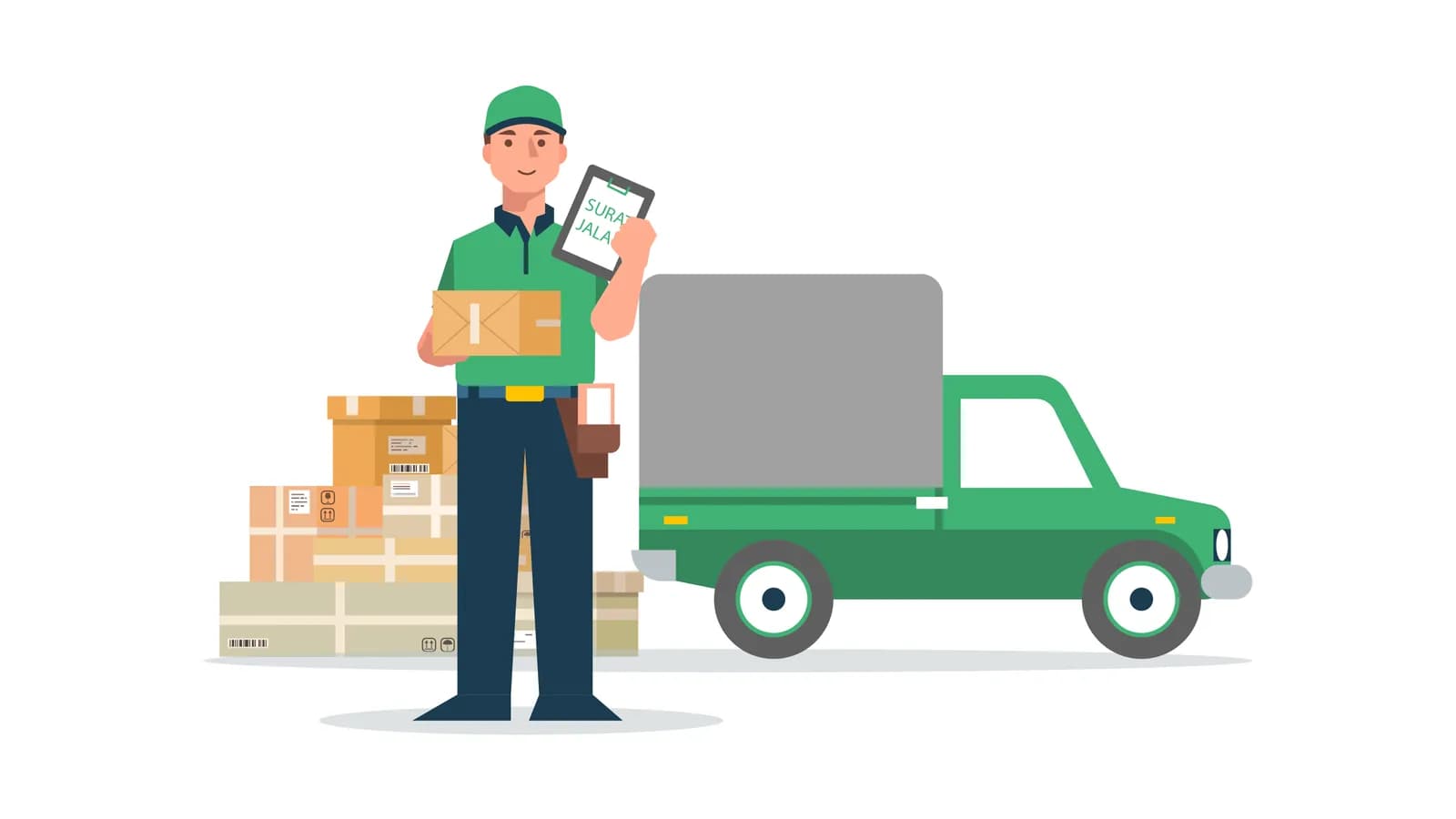
A delivery order is the document that accompanies goods shipped from a sender to a recipient, itemizing what was sent and signed by the recipient as proof of handover. It is also called a delivery note; in Indonesia it is known as a surat jalan.
Because a delivery involves two parties, the goods must be described clearly so that what is shipped matches what is received. If it doesn't, the recipient can raise a complaint using the delivery order as the reference.
What are the functions of a delivery order?
- An itemized list of goods shipped — type, quantity, and notes for each item.
- An official record of the transaction between sender and recipient.
- Proof of receipt — the recipient's signature confirms the goods arrived as agreed.
- Basis for invoicing — the signed delivery order supports issuing or collecting the invoice.
- Travel document — carried by the driver or courier while the goods are in transit.
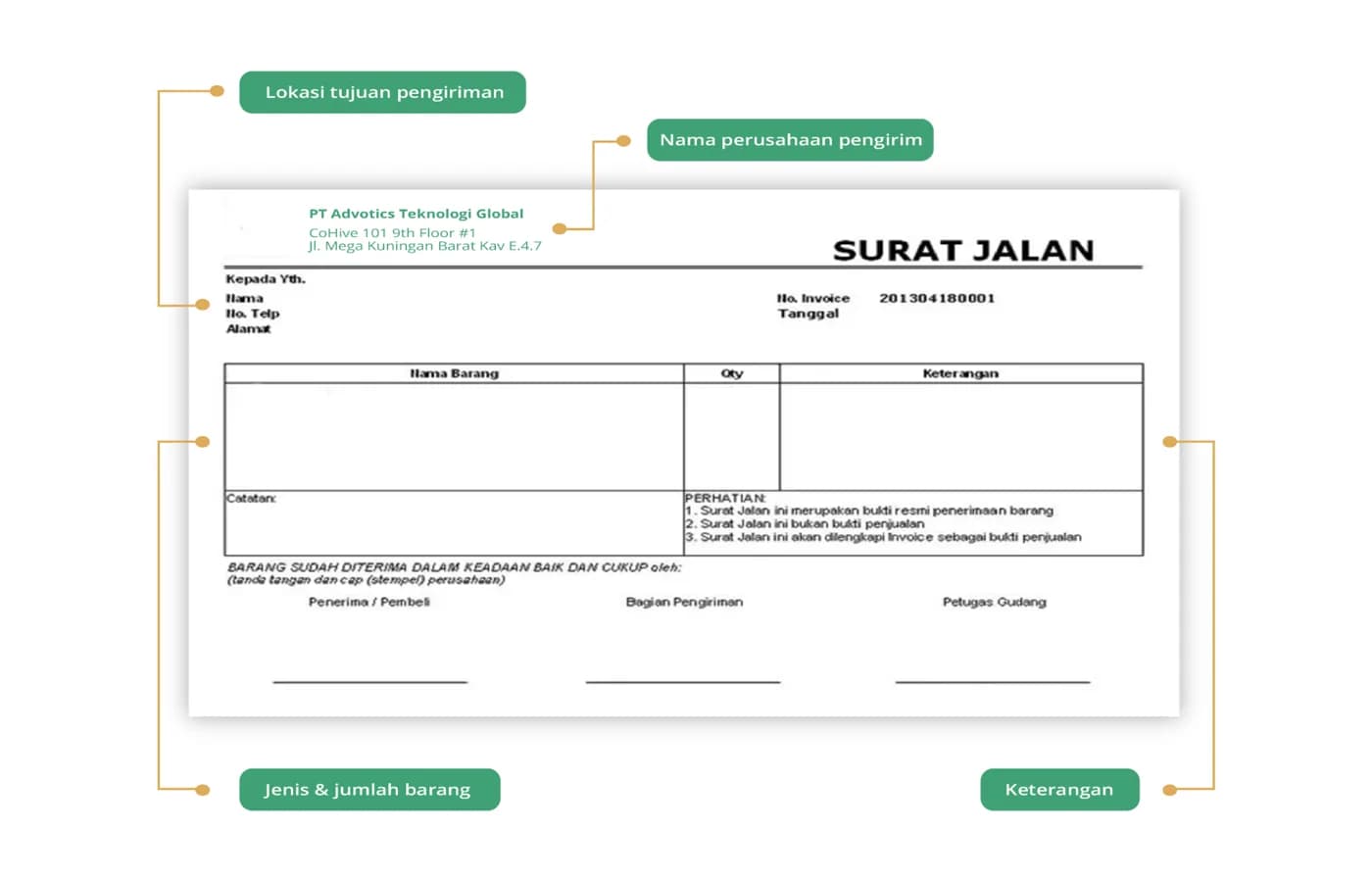
What does a delivery order contain?
The format can be adapted to each company, but it usually includes:
- Letterhead with the sender's name and contact details
- Delivery order number and date
- Recipient name and delivery address
- Item types and quantities
- Item notes (for example batch number, condition, or special handling)
- Recipient's signature
- Sender's or driver's signature
- Warehouse staff signature
How many copies are there, and who keeps them?
Paper delivery orders in Indonesia are commonly made in triplicate. Colors and distribution vary by company, but a typical pattern is:
| Copy | Common color | Kept by | Purpose |
|---|---|---|---|
| I | White | Returned to the sender | Proof of handover, basis for invoicing |
| II | Red | Recipient | Proof the goods were received in good condition |
| III | Yellow | Sender's archive (warehouse/admin) | Transaction record |
What types of delivery orders are there?
Besides delivery orders for goods, there are vehicle travel documents, goods-out slips from the warehouse, heavy-equipment delivery documents, and official travel letters. The principle is the same: a document stating what is carried, by whom, and where to.
What are the problems with paper delivery orders?
- Returned copies arrive late or get lost, delaying invoicing.
- Hard to track — the sender only learns the goods were received once the driver returns.
- Prone to errors in quantities or items, discovered only when a complaint comes in.
- Archives pile up and are hard to search during audits.
How does a digital delivery order work?
With a digital delivery system, the delivery order is created in the system and linked to the original order:
- The admin creates the delivery order from the sales order — no re-typing.
- Routes and vehicle assignments are planned automatically around capacity and schedules, as in Advotics Delivery Plan.
- The delivery order lands in the driver's or courier's app.
- On site, the recipient signs in the app. Photos of the goods, the signature, and time-stamped coordinates are recorded as electronic proof of delivery.
- Delivery status is visible at the office right away, and invoicing can proceed — for example in Advotics Distribution, which connects sales orders, delivery orders, and invoices.
Delivery orders are closely tied to warehouse stock accuracy; see how to keep it right in 8 stock taking steps. Want to digitize your deliveries? Contact the Advotics team.
Frequently asked questions
What is a delivery order?
A delivery order is the document carried with goods from sender to recipient. It itemizes what is shipped and is signed by the recipient as proof the goods were received.
What is the difference between a delivery order and an invoice?
A delivery order records the goods shipped and received and doesn't need to show prices. An invoice is the request for payment for those goods. A signed delivery order is often the basis for issuing or collecting the invoice.
Who issues the delivery order?
The sender issues it — usually the warehouse or shipping admin — and the driver or courier carries it with the goods.
Can delivery orders be digital?
Yes. With a delivery app, the order is created in the system, sent to the driver's app, and the recipient signs electronically. Photos of the goods and the delivery location are recorded as proof.