What Is a Cold Chain? Definition, Components, and How to Keep Products at the Right Temperature
A cold chain is a temperature-controlled storage and distribution system. Learn temperature ranges, components, example products, and how to prevent spoilage.
By Tim Advotics · · Updated · 3 min read
Key takeaways
- A cold chain is a temperature-controlled chain of storage and distribution, from manufacturer to consumer, that keeps products from spoiling.
- Products that need it include vaccines and some medicines, meat and seafood, dairy, ice cream, and fresh produce.
- Its components: refrigerated storage, refrigerated transport, cold packaging, temperature monitoring, and handling procedures.
- Failures usually happen at handover points — loading, unloading, and transit — so recording temperature and time at every point is essential.
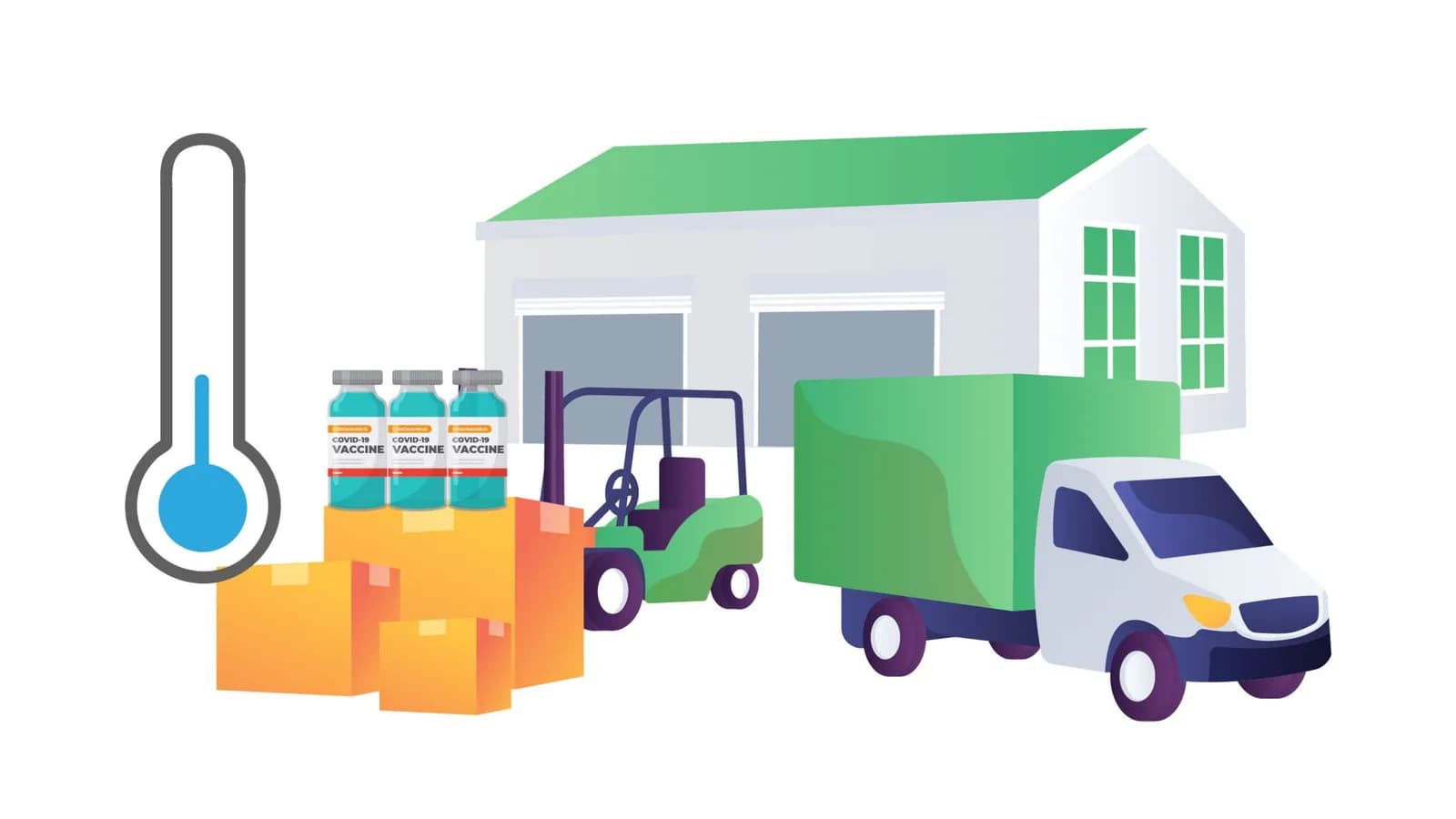
A cold chain is a temperature-controlled chain of storage and distribution — from manufacturer to consumer — that keeps temperature-sensitive products from spoiling. It combines distribution with temperature control: warehouses, vehicles, and packaging are designed to hold products within a specified temperature range.
Which products need a cold chain?
| Category | Examples | Typical temperature needs |
|---|---|---|
| Pharmaceuticals | Vaccines, insulin, biologics | Chilled, mostly +2°C to +8°C |
| Frozen foods | Ice cream, frozen meat, ready meals | Frozen |
| Fresh protein | Meat, poultry, seafood | Chilled |
| Dairy | Fresh milk, yogurt, cheese | Chilled |
| Horticulture | Fresh fruit and vegetables | Cool, varies by type |
Exact ranges differ by product — always follow the manufacturer's requirements and applicable regulations.
What are the components of a cold chain?
- Refrigerated storage — cold stores, cold rooms, freezers, and refrigerators.
- Refrigerated transport — reefer trucks or containers for long hauls and cold boxes for short trips.
- Cold packaging — insulated boxes, ice packs, or dry ice as required.
- Temperature monitoring — thermometers, data loggers, or sensors recording temperature throughout storage and transport.
- Procedures and people — handling, loading and unloading, and what to do when temperatures go out of range.
How does the cold chain work for vaccine distribution?
According to WHO guidance, most vaccines must be kept at +2°C to +8°C from the factory until use; otherwise they can lose effectiveness. Vaccine distribution is typically tiered:
- National level — large cold rooms, freezers, cold boxes, and refrigerated trucks.
- Provincial/district level — cold rooms or refrigerators, sometimes refrigerated trucks.
- Health facilities — dedicated vaccine refrigerators, cold boxes, and vaccine carriers.
At every level, temperatures are checked and logged routinely, vaccines are placed away from temperature extremes, and freeze-sensitive vaccines are tested if freezing is suspected.
How do you keep a cold chain intact?
- Record temperatures at every point — warehouse, vehicle, and handover — with timestamps.
- Minimize loading and unloading time with planned arrival schedules.
- Apply FEFO (first expired, first out) so products with the shortest shelf life leave first — see inventory management.
- Plan routes to keep transit short and within refrigerated vehicle capacity.
- Prepare emergency procedures for refrigeration failures on the road.
How does technology support the cold chain?
- Advotics Warehouse tracks stock locations and movements down to the bin, including issue order.
- Advotics Delivery Plan plans routes around vehicle capacity and operating hours and records time- and location-stamped proof of delivery.
- Advotics Vehicle monitors fleet location and utilization, including backup vehicles when one breaks down.
Learn about production quality standards in Good Manufacturing Practices and the basics of logistics management. Want more control over distributing temperature-sensitive products? Contact the Advotics team.
Frequently asked questions
What is a cold chain?
A cold chain is a storage and distribution system that keeps products within a set temperature range from production until they reach the consumer, so quality and safety are preserved.
At what temperature are vaccines stored?
Most vaccines are stored between +2°C and +8°C in line with WHO guidance, although some vaccines must be kept frozen. Always follow each vaccine manufacturer's requirements.
Which products need a cold chain?
Vaccines and some medicines, meat, poultry and seafood, milk and dairy products, ice cream and frozen foods, and fresh fruit and vegetables.
What is the biggest risk in a cold chain?
Temperature excursions, especially during loading, unloading, transit, or when refrigeration equipment fails. Products that leave their temperature range can lose quality or become unsafe.